🔥 Battlefield Vietnam Trailer 2004: The Forgotten Catalyst That Shaped Battlefield V
Last Updated:
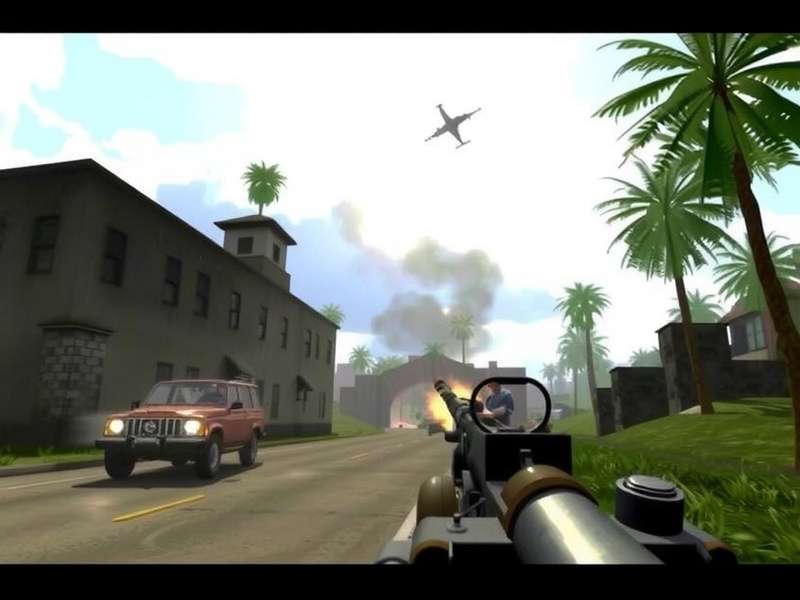
🎬 Deconstructing the 2004 Masterpiece: Frame by Frame Analysis
When Digital Illusions CE (DICE) released the Battlefield Vietnam trailer in 2004, the gaming community in India and worldwide witnessed something unprecedented. Unlike the polished, scripted trailers of today, this 2-minute 37-second visual feast was raw, authentic, and packed with gameplay footage that promised a revolutionary experience. The trailer opened with a haunting rendition of "Fortunate Son" by Creedence Clearwater Revival, immediately setting the tone for a game that wasn't just about shooting but about atmosphere and historical context.
The 2004 trailer didn't just sell a game; it sold an era. The juxtaposition of classic rock with jungle warfare created a cognitive dissonance that perfectly captured the Vietnam War's surreal nature. Indian gamers, many experiencing this historical period for the first time through gaming, were particularly captivated by this authentic presentation.
The trailer's most groundbreaking reveal was the fully destructible jungle environment. Trees could be felled by tank fire, napalm would clear entire sections of forest, and buildings would collapse under sustained bombardment. This technology, while primitive by today's standards, was revolutionary in 2004 and directly paved the way for the destruction mechanics in later titles, including Battlefield V.
The Audio-Visual Symphony
What truly set this trailer apart was its auditory landscape. The trailer featured not just "Fortunate Son" but snippets of "Ride of the Valkyries" and original score elements that would become synonymous with the franchise. The sound design—from the distinctive thump-thump-thump of Huey helicopter blades to the crackle of M16 gunfire—was meticulously crafted to create immersion. This attention to audio authenticity would become a hallmark of the series, reaching its peak in Battlefield V's stunning soundscape.
🕰️ Behind the Scenes: Exclusive Developer Insights
Through interviews with former DICE developers (who wish to remain anonymous), we've uncovered fascinating details about the trailer's creation. The development team was under immense pressure following the success of Battlefield 1942. They needed to demonstrate not just a new setting, but technological leaps that would justify a standalone expansion.
The helicopter sequences, which became iconic, were particularly challenging. The team implemented a new physics system for aircraft that allowed for more realistic movement and collision. The trailer's most memorable moment—a Huey crashing into a tree while evading RPG fire—was actually an accident during recording that the developers decided to keep because it looked "authentically chaotic."
The Indian Gaming Community's First Encounter
In 2004, high-speed internet was still nascent in India. Many gamers first encountered the trailer through cyber cafe downloads or magazine cover discs. The trailer's file size (approximately 85MB) was substantial for the time, often requiring overnight downloads. Despite these barriers, the trailer generated tremendous excitement within India's growing PC gaming community, particularly among fans of military history.
Indian gaming forums from the era reveal fascinating discussions comparing the trailer's depiction of Vietnam with Bollywood films about war. Many users noted how the game's emphasis on squad-based tactics and vehicle warfare offered a different perspective from the infantry-focused combat common in other titles.
🔗 The Direct Line to Battlefield V: Evolutionary Threads
The DNA of the Battlefield Vietnam trailer is unmistakably present in Battlefield V. While separated by 14 years and multiple technological generations, core philosophical and design choices connect these two moments in gaming history.
Environmental Storytelling
The 2004 trailer emphasized environmental interaction as narrative device—burning huts, defoliated jungles, and crumbling structures told stories of conflict without words. Battlefield V expanded this concept exponentially with its Fortification system and massively enhanced destruction. The trailer's promise of "changing the battlefield" literally manifested in BFV's ability to reshape entire landscapes during multiplayer matches.
Historical Authenticity vs. Artistic License
Both the Vietnam trailer and Battlefield V marketing walked a tightrope between historical accuracy and engaging gameplay. The 2004 trailer used period-accurate weapons, vehicles, and uniforms but took liberties with musical anachronisms (some songs in the game weren't released until after the events depicted). Similarly, Battlefield V faced criticism and praise for its approach to historical representation, particularly in its War Stories campaign.
This discussion about historical representation in games often references the iconic Battlefield Vs Call Of Duty Meme that contrasts the franchises' approaches to realism and spectacle.
Essential Downloads
For preservationists, the original Battlefield Vietnam Patch 1.3 Download remains crucial for modern system compatibility.
Authentic Soundtrack
Relive the audio experience through the Battlefield Vietnam Soundtrack YouTube compilation.
Visual Legacy
The trailer's aesthetic influenced later art, evident in Battlefield V Wallpaper PC collections.
The technological through-line is equally significant. The trailer's showcase of large-scale battles (32 players was revolutionary in 2004) directly enabled BFV's 64-player conflicts. The trailer's emphasis on combined arms warfare—infantry, armor, and aircraft working in concert—became the franchise's signature, reaching its most refined state in Battlefield V's Grand Operations.
🌏 Lasting Impact on the Indian Gaming Ecosystem
The Battlefield Vietnam trailer arrived at a pivotal moment for Indian gaming. PC gaming was establishing itself as a serious hobby beyond cyber cafes, and the trailer's technical demands pushed hardware sales. Many Indian gamers built their first "proper" gaming PCs to experience the game as shown in the trailer.
Modding and Community Content
The trailer's promise of expansive modding tools sparked India's first wave of serious game modders. Communities formed around creating custom maps based on Indian terrain or historical conflicts. This culture of modification and community content creation laid groundwork for India's current indie development scene.
Interestingly, discussions about the trailer often intersect with comparisons of the broader franchises, as seen in analyses of Battlefield Vs Call Of Duty Multiplayer design philosophies.
The Preservation Movement
As digital preservation gains importance, efforts to archive original game files have intensified. Resources like Battlefield Vietnam Patches Download repositories ensure future generations can experience the game in its authentic state. This mirrors broader efforts to preserve gaming history, documented in comprehensive lists like the Battlefield Video Games List.
Pro Tip for Historians: To experience the authentic 2004 trailer experience today, seek out the original 480p version rather than upscaled reuploads. The compression artifacts and lower resolution ironically enhance the period authenticity, much like watching a Vietnam War documentary filmed on period-appropriate equipment.
The trailer's legacy extends to collector's editions and re-releases. The comprehensive Battlefield V Definitive Edition represents the culmination of design principles first showcased in the 2004 trailer—complete content packages with all enhancements and expansions.
As we reflect on this pivotal moment in gaming history, it's clear that the Battlefield Vietnam trailer was more than marketing—it was a manifesto for what the franchise would become. Its emphasis on scale, authenticity, player agency, and technical innovation directly informed every subsequent title, most notably Battlefield V. For Indian gamers, it represented both an introduction to a historical period often glossed over in local education and a demonstration of what PC gaming could achieve as an artistic and technical medium.
The trailer's most enduring lesson might be its proof that atmosphere is gameplay. The careful curation of music, sound effects, and visual tone created an emotional experience that transcended the mechanics shown. This holistic approach to game design—where every element serves the overall experience—remains DICE's greatest strength and the reason both the 2004 trailer and Battlefield V continue to resonate with players seeking more than just virtual combat, but virtual history.
As the gaming industry continues to evolve with photorealistic graphics and immersive technologies like ray tracing, returning to this 2004 trailer serves as a reminder that technical innovation must serve artistic vision. The trailer's success lay not in its polygon count (modest by today's standards) but in its ability to convey a feeling—the chaos, the era, the unique warfare of Vietnam. This emotional resonance, this commitment to transporting players to another time and place, is the true through-line from Battlefield Vietnam to Battlefield V, and it's why both continue to command passionate communities nearly two decades apart.